|
|

 |
|
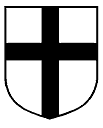
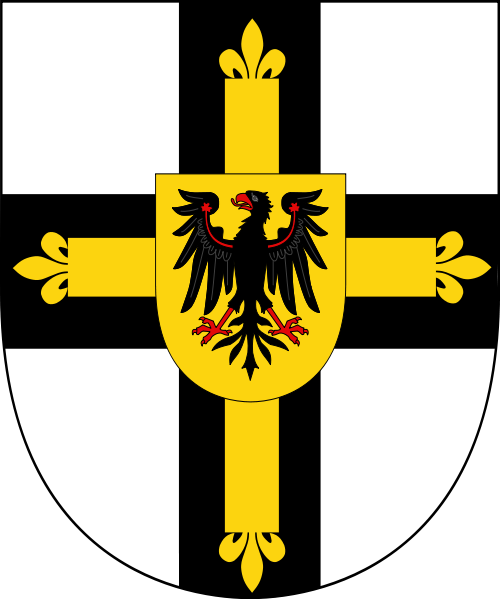
The Livonian Order of Teutonic Knights The Livonian Order
was an autonomous branch of the Teutonic Order, formed in 1237. From 1435 to 1561 it was a member of the Livonian
Confederation. The order was formed from the remnants of the Livonian
Brothers of the Sword after their defeat by Samogitians in 1236 at the Battle of Schaulen (Saule). They were incorporated
into the Teutonic Knights and became known as the Livonian Order in 1237. Between 1237 and 1290, the Livonian Order conquered
all of Courland, Livonia and Semigallia. In 1298, Lithuanians took Karkus Castle north of Riga, and defeated the order
in the Battle of Turaida, killing Livonian Land Master Bruno and 22 knights. In 1346, the order bought the Duchy
of Estonia from King Valdemar IV of Denmark. Life within the order's territory is described in the Chronicle of
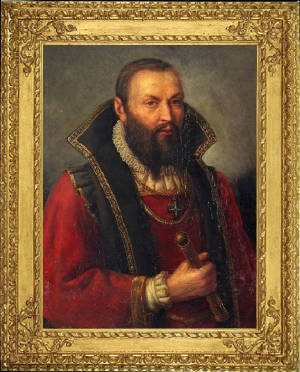
Balthasar Russow (Chronica der Provinz Lyfflandt). The Teutonic Order fell into decline following its defeat in the Battle of Grunwald in 1410 and the secularization of its Prussian territories by Albert of Brandenburg in 1525, while the Livonian Order managed to maintain an independent existence. The Livonian Order's defeat in the Battle of Swienta (Pabaiskas) on September 1, 1435, which claimed the lives of the master and several high-ranking knights, brought the order closer to its neighbors in Livonia. The Livonian Confederation agreement (eiine fruntliche eyntracht) was signed in Walk on December 4, 1435, by the Archbishop of Riga, the bishops of Courland, Dorpat, Ösel-Wiek and Reval; the representatives of the Livonian Order and vassals, and the deputies of Riga, Reval and Dorpat city municipal councils. During the Livonian War, however, the order suffered a decisive defeat by troops of Muscovite Russia in the Battle of Ergeme in 1560. The Livonian Order then sought protection from Sigismund II Augustus, the King of Poland and the Grand Duke of Lithuania, who had intervened in a war between Bishop William of Riga and the Brothers in 1557. After coming to an agreement with Sigismund II, Augustus and his representatives (especially Mikołaj "the Black" Radziwiłł), the last Livonian Master, Gotthard Kettler, secularized the order and converted to Lutheranism. In the southern part of the Brothers' lands he created the Duchy of Courland and Semigallia for his family. Most of the remaining lands were seized by the Grand Duchy of Lithuania. The north of Estonia was taken back by Denmark and Sweden. From the 14th to the 16th centuries, Middle Low German as spoken in the towns of the Hanseatic League was the established language, but was subsequently succeeded by High German as official language in the course of the 16th and 17th centuries. The Masters of The Livonian Order The Livonian Master, like the grandmaster of the Teutonic Order, was elected by his fellow knights for a life term. The grandmaster exercised supervisory powers and his advice was considered equal to a command. The grandmaster of Teutonic knights did not limit local autonomy, he rarely visited Livonia or sent ambassadors for oversight. ● Hermann Balk 1237–1238 Commanderies of the Livonian Order Across modern territory of Estonia and Latvia Commanderies of the Estonia
Commanderies of the Latvia
|